
Knee Fracture Treatment in Mount Pleasant, SC
A knee fracture is a serious injury that can affect your ability to walk, bear weight, and perform everyday activities. Whether caused by a sports injury, fall, motor vehicle accident, or weakened bones due to osteoporosis, prompt evaluation and appropriate treatment are essential to promote proper healing and restore knee function.
Blake Ohlson, M.D. provides comprehensive diagnosis and treatment for knee fractures in Mount Pleasant, SC, caring for both traumatic injuries and fractures related to bone weakness. Using advanced imaging and personalized treatment planning, he offers both nonsurgical and surgical solutions designed to restore alignment, protect joint function, and support a successful recovery.
Serving patients throughout Mount Pleasant, Charleston, Summerville, and surrounding South Carolina communities, Dr. Ohlson delivers expert orthopedic care focused on helping patients recover safely and regain mobility after a knee fracture.
What is a Knee Fracture?
A fracture is a condition in which there is a break in the continuity of the bone. In younger individuals, these fractures are caused by high energy injuries, as from a motor vehicle accident. In older people, the most common cause is a weak and fragile bone.
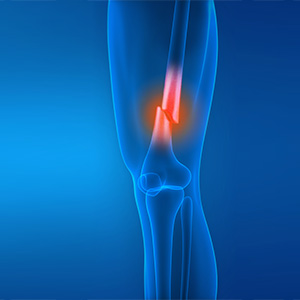
Fractures of the knee can include the following:
Distal femur fracture: The distal femur is part of the femur bone that flares out like the mouth of the funnel. A distal femur (top part of knee joint) fracture is a break in the thighbone that occurs just above your knee joint.
Femoral shaft fracture: A femoral shaft fracture is a break that occurs anywhere along the femoral shaft, long, straight part of the femur.
Fractures of proximal tibia: A proximal tibial fracture is a break in the upper part of the shin bone or tibia. Proximal tibial fractures may or may not involve the knee joint. Fractures that enter the knee joint may cause joint imperfections, irregular joint surfaces, and improper alignment in the legs. This can lead to joint instability, arthritis, and loss of motion. These fractures are caused by stress or trauma or in a bone already compromised by disease, such as cancer or infection. Proximal tibia fractures can result in injury to the surrounding soft tissues including skin, muscle, nerves, blood vessels, and ligaments.
Tibial shaft fractures: A tibial shaft fracture is a break that occurs along the length of the tibia or shin bone (larger bone of the lower leg) between the knee and ankle joints. These fractures can occur while playing sports such as soccer and skiing.
How is Knee Fracture Diagnosed?
Diagnosis is made through your medical history, a physical examination, and other diagnostic imaging tests. X-rays are taken to know whether the bone is intact or broken. X-rays are also helpful to know the type and location of the fracture. Your doctor may also recommend a computerized tomography (CT) scan to know the severity of the fracture.
How is Knee Fracture Treated?
Treatment options include non-surgical and surgical. Non-surgical treatment involves skeletal traction and use of casts and braces. Skeletal traction involves placement of pin into the bone in order to realign broken bones. Surgery involves internal fixation and external fixation.
Internal fixation
Intramedullary nailing: In this procedure, a specially designed metal rod is placed into the canal of the femur. Then the nail is passed on to reach the fracture site and keep it in place. The rod is secured in place with screws at both ends.
Plates and Screws fixation: In this procedure, your surgeon will reposition the broken bone ends into normal position and then uses special screws or metal plates on the outer surface of the bone to hold the bone fragments in place.
External fixation
During the procedure, metal pins or screws are inserted into the middle of the femur and tibia and are attached to a device outside the skin to hold bone fragments in place to allow alignment and healing.
If your bone is fractured in many pieces, a plate or rod is fixed at both ends of the fracture to maintain the overall shape and length of the bone in place while it heals. In elder patients, where fracture healing delays, a bone graft taken from the patient or tissue bank may be used to form callous. In severe cases, the bone fragments are removed and the bone is replaced with a knee replacement implant.
Complications of the Surgery
The most common complications of surgery include infection, knee stiffness, delayed bone healing, and knee arthritis.
Why Choose Dr. Blake Ohlson for Knee Fracture Treatment in Mount Pleasant, SC?
Knee fractures often require specialized orthopedic care to ensure proper healing and minimize the risk of long-term complications such as arthritis, stiffness, or loss of function. Dr. Blake Ohlson provides individualized treatment based on the type, location, and severity of each fracture.
Patients throughout Mount Pleasant choose Dr. Ohlson because he offers:
- Board-certified orthopedic expertise in the treatment of fractures and traumatic knee injuries
- Comprehensive evaluations using advanced diagnostic imaging
- Personalized treatment plans based on fracture pattern, overall health, and activity goals
- Conservative fracture management when appropriate, including bracing and immobilization
- Advanced surgical techniques for complex fractures requiring fixation or reconstruction
- Expertise in regenerative medicine and comprehensive orthopedic care to support recovery when appropriate
- Patient-focused rehabilitation plans designed to restore strength, mobility, and knee function
Dr. Ohlson is committed to helping patients recover from knee fractures while reducing the risk of future complications and supporting long-term joint health.
Knee Fracture FAQs
What is a knee fracture?
A knee fracture is a break in one or more of the bones that make up the knee joint or the bones immediately above or below it. Common fracture locations include the distal femur, proximal tibia, tibial shaft, and surrounding structures.
What causes a knee fracture?
Knee fractures commonly result from:
- Falls
- Motor vehicle accidents
- Sports injuries
- Direct blows to the knee
- Osteoporosis or weakened bones in older adults
What are the symptoms of a knee fracture?
Common symptoms include:
- Severe knee pain
- Swelling and bruising
- Difficulty or inability to bear weight
- Visible deformity in some cases
- Limited range of motion
- Tenderness around the injured bone
How is a knee fracture diagnosed?
Diagnosis begins with a physical examination and medical history. Imaging studies such as X-rays are typically used to confirm the fracture, while CT scans may be recommended to evaluate complex fractures and surgical planning.
Can a knee fracture heal without surgery?
Some stable or minimally displaced fractures can heal with nonsurgical treatment, including immobilization with a brace or cast, activity modification, and close follow-up. More complex or displaced fractures often require surgery to restore proper alignment.
What surgical treatments are available for knee fractures?
Depending on the injury, surgery may include:
- Internal fixation with plates and screws
- Intramedullary nailing
- External fixation
- Bone grafting in selected cases
- Knee replacement for severe fractures that cannot be reconstructed
Your treatment will depend on the fracture type, bone quality, and overall health.
How long does recovery take after a knee fracture?
Recovery varies depending on the severity of the fracture and the treatment performed. Healing often takes several months and usually includes a structured rehabilitation program to restore strength, flexibility, and function.
When should I seek immediate medical attention for a knee injury?
You should seek immediate orthopedic evaluation if you experience severe pain, significant swelling, inability to bear weight, visible deformity, numbness, or if your injury resulted from a high-impact accident or fall.
Schedule a Knee Fracture Evaluation in Mount Pleasant, SC
A knee fracture requires prompt diagnosis and expert orthopedic care to promote proper healing and protect long-term joint function. Early treatment can help reduce complications and improve your recovery.
Schedule your appointment with Dr. Ohlson in Mount Pleasant, SC for a comprehensive evaluation of your knee injury. Proudly serving patients throughout Mount Pleasant, Charleston, Summerville, and surrounding South Carolina communities, Dr. Ohlson provides advanced fracture care, personalized treatment plans, and rehabilitation designed to help you safely return to your daily activities.