
ACL Tear Treatment in Mount Pleasant, SC
An ACL tear is one of the most common knee injuries among athletes and active individuals, often occurring during sports that involve sudden stops, cutting, pivoting, or jumping. Whether your injury happened on the playing field, at the gym, or during everyday activities, prompt evaluation is essential to restore knee stability and reduce the risk of further joint damage.
Blake Ohlson, M.D. provides expert diagnosis and treatment for ACL tears in Mount Pleasant, SC, offering personalized care for patients of all activity levels. Treatment plans are tailored to the severity of the injury, your lifestyle, and your goals, and may include physical therapy, bracing, regenerative medicine therapies when appropriate, or advanced arthroscopic ACL reconstruction for patients who require surgical treatment.
Serving patients throughout Mount Pleasant, Charleston, Summerville, and surrounding South Carolina communities, Dr. Ohlson focuses on helping patients recover safely, regain knee function, and return to the activities they enjoy.
What is the ACL?
The anterior cruciate ligament (ACL) is one of the major ligaments of the knee. It is located in the middle of the knee and runs from the femur (thighbone) to the tibia (shinbone). The ACL prevents the tibia from sliding out in front of the femur. Together with the posterior cruciate ligament (PCL), it provides rotational stability to the knee.
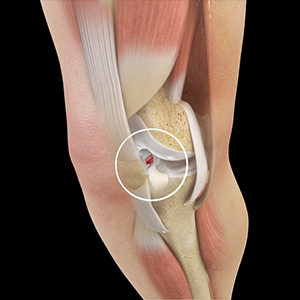
What are the Causes of ACL Tears?
An ACL injury is a sports-related injury that occurs when the knee is forcefully twisted or hyperextended. An ACL tear usually occurs with an abrupt directional change when the foot is fixed on the ground or when the deceleration force crosses the knee. Changing direction rapidly, stopping suddenly, slowing down while running, landing from a jump incorrectly, and direct contact or collision, such as a football tackle can also cause injury to the ACL.
What are the Symptoms of ACL Tears?
When you injure your ACL, you may hear a pop sound and may feel as though the knee has given way. Within the first two hours after injury, your knee will swell and you may have a buckling sensation in the knee during twisting movements.
How are ACL Tears Diagnosed?
The diagnosis of an ACL tear is made by reviewing your symptoms and medical history and performing a physical examination of the knee. Other diagnostic tests such as X-rays, MRI scans, stress tests of the ligament and arthroscopy may also be ordered.
What is the Treatment for ACL Tears?
Treatment options include both non-surgical and surgical methods. If the overall stability of the knee is intact, your doctor may recommend non-surgical methods. Non-surgical treatment consists of rest, ice, compression and elevation (RICE protocol); all of these assists in controlling pain and swelling. Physical therapy may be recommended to improve knee motion and strength. A knee brace may be needed to help immobilize your knee.
Young athletes involved in pivoting sports will most likely require surgery to safely return to sports. The usual surgery for an ACL tear is an ACL reconstruction which tightens your knee and restores its stability. Surgery to reconstruct an ACL is performed with an arthroscope, using small incisions. During the surgery, your doctor will replace the torn ligament with a tissue graft that can be obtained from your knee (patellar tendon) or hamstring muscle.
Following ACL reconstruction, a rehabilitation program is started to help you resume a wider range of activities.
Why Choose Dr. Blake Ohlson for ACL Tear Treatment in Mount Pleasant, SC?
An ACL injury requires an accurate diagnosis and a treatment plan that supports both short-term recovery and long-term knee health. Dr. Blake Ohlson provides comprehensive orthopedic care using evidence-based treatment options tailored to each patient's needs.
Patients throughout Mount Pleasant choose Dr. Ohlson because he offers:
- Board-certified orthopedic expertise in sports-related knee injuries
- Comprehensive evaluations to determine the severity of ACL damage and associated injuries
- Individualized treatment plans based on age, activity level, and recovery goals
- Conservative treatment options for selected patients with stable ACL injuries
- Advanced arthroscopic ACL reconstruction using minimally invasive techniques when surgery is indicated
- Expertise in regenerative medicine and biologic therapies as part of comprehensive orthopedic care for appropriate candidates
- Personalized rehabilitation guidance to support a safe return to sports, work, and daily activities
Dr. Ohlson works closely with each patient to restore knee stability, improve function, and reduce the risk of future injury.
ACL Tear FAQs
What is the ACL?
The anterior cruciate ligament (ACL) is one of the four major ligaments of the knee. It helps stabilize the joint by preventing excessive forward movement and rotational instability of the shinbone.
What causes an ACL tear?
ACL tears commonly occur during activities involving:
- Sudden pivoting or cutting movements
- Rapid changes in direction
- Jumping and awkward landings
- Sudden stops while running
- Direct impact to the knee during sports or accidents
What are the symptoms of an ACL tear?
Common symptoms include:
- A popping sensation at the time of injury
- Immediate knee swelling
- Knee instability or "giving way"
- Pain during movement
- Difficulty walking or bearing weight
- Limited range of motion
How is an ACL tear diagnosed?
Diagnosis typically includes a physical examination, a review of your symptoms and injury history, and imaging studies such as X-rays and MRI. MRI is especially useful for confirming ACL tears and identifying associated injuries to the meniscus or cartilage.
Can an ACL tear heal without surgery?
A completely torn ACL generally does not heal on its own. Some patients with partial tears or lower activity demands may achieve good function through physical therapy, bracing, and rehabilitation. Others, particularly athletes participating in pivoting sports, often benefit from surgical reconstruction.
When is ACL surgery recommended?
ACL reconstruction is commonly recommended for active individuals experiencing knee instability, patients who wish to return to sports involving cutting or pivoting movements, or those with additional ligament or meniscus injuries.
What is recovery like after ACL reconstruction?
Recovery involves a structured rehabilitation program focused on restoring range of motion, strength, balance, and knee stability. Return to sports typically takes several months and varies based on individual healing and rehabilitation progress.
When should I see an orthopedic specialist for a knee injury?
You should seek evaluation if you experience significant swelling, instability, difficulty walking, a popping sensation at the time of injury, or persistent knee pain following a sports injury or accident.
Schedule an ACL Tear Evaluation in Mount Pleasant, SC
An ACL injury can affect your mobility, athletic performance, and long-term knee health if left untreated. Early diagnosis and an individualized treatment plan can help you recover safely and return to the activities you enjoy with greater confidence.
Schedule your appointment with Dr. Ohlson in Mount Pleasant, SC for a comprehensive evaluation of your knee injury. Proudly serving patients from Mount Pleasant, Charleston, Summerville, and surrounding South Carolina communities, Dr. Ohlson provides advanced orthopedic care focused on restoring knee stability, improving function, and helping patients achieve lasting recovery.