
Shockwave Therapy for Plantar Fasciitis in Mount Pleasant, SC
Persistent heel pain from plantar fasciitis can make every step uncomfortable and interfere with your daily activities, work, or athletic performance. Blake Ohlson, M.D. offers advanced shockwave therapy for plantar fasciitis in Mount Pleasant, SC, providing a non-invasive treatment option for patients who have not found relief with rest, physical therapy, medications, orthotics, or other conservative treatments. Extracorporeal Shock Wave Therapy (ESWT) uses focused acoustic waves to stimulate the body's natural healing response, improve blood flow, and promote tissue regeneration without surgery.
Dr. Ohlson develops individualized treatment plans based on your symptoms, activity level, and treatment goals. His objective is to relieve heel pain, restore foot function, and help patients return to their normal activities with minimal downtime.
What is Shockwave Treatment for Plantar Fasciitis?
Shockwave treatment, also known as Extracorporeal Shock Wave Therapy (ESWT), is a conservative procedure to treat plantar fasciitis of the foot, where shockwaves are passed through the heel to stimulate healing of the inflamed plantar fascia tissues. Shockwave treatment utilizes mechanical high energy sound waves, which function by improving blood flow to the inflamed area to speed up the healing process.
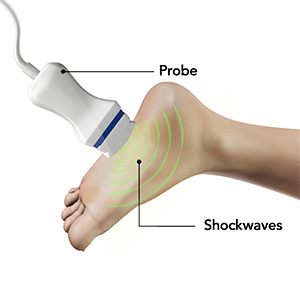
Shockwave treatment or ESWT is a non-invasive (no cutting of skin and no introduction of any medical device in the body) method of treating soft tissue injuries. Extracorporeal means outside the body. ESWT does not disintegrate tissue; rather it causes biological effects that help in tissue regeneration. ESWT reduces pain and sensitivity immediately by over-stimulating pain transmission nerves and triggers repair mechanisms.
What is Plantar Fasciitis?
Plantar fasciitis is a painful foot condition where the plantar fascia becomes inflamed from overstretching or overuse, causing pain in the heel and bottom of the foot. Repetitive strain to the plantar fascia can result in tiny tears in the ligament, leading to pain and swelling, which can make walking difficult. It is one of the most common causes of heel pain and is most often seen in middle-aged men and women, but may also occur in those who are constantly on their feet or active in sports and athletics.
Anatomy of the Plantar Fascia
The plantar fascia is a long, thin ligament present along the bottom of the foot that creates the arch of the foot. It extends from the heel bone, and then splits and fans out to attach itself to the toes. It acts as a shock absorber and supports the arch of your foot and functions like a bowstring to stiffen your foot while you walk.
Indications for Shockwave Treatment for Plantar Fasciitis
Shockwave treatment is indicated when other conservative treatment methods such as rest, medications, physical therapy, night splints, supportive shoes, and orthotics do not show improvement even when used over a period of 6 months. It is used as an alternative treatment modality to surgery. Most of the patients who undergo shockwave therapy show a significant reduction of pain and improvement in movements compared to other conservative treatment options.
Preparation for Shockwave Treatment for Plantar Fasciitis
Preparation for shockwave treatment for plantar fasciitis will involve the following steps:
- A review of your medical history to determine if the procedure is appropriate for you.
- You should inform your doctor of any medications, vitamins, or supplements that you may be taking.
- Your doctor will advise you to stop taking any anti-inflammatory medications such as aspirin or ibuprofen at least 5 days prior to the procedure.
- A written consent will be obtained from you after the procedure has been explained in detail.
Procedure for Shockwave Treatment for Plantar Fasciitis
Shockwave treatment is performed on an outpatient basis and hence you can go home the same day without the need for an overnight stay. You may require at least 2 to 3 sessions of shockwave therapy based on the severity of the condition. The procedure involves the following:
- You are asked to lie on your stomach with your legs supported by a pillow.
- Local and/or sedation anesthesia may be administered for comfort as high-energy shock waves are employed.
- Ultrasound gel is applied to the heel area to enhance transmission of the shockwaves.
- Shockwaves are then delivered through a hand-held probe attached to the shockwave machine.
- The probe is moved over the heel area to deliver compressed air pulses in a systematic manner through the gel.
- The shock waves penetrate the skin of the heel area to stimulate healing.
- You may feel some discomfort during the process and may feel a tapping sound from the probe.
- The treatment takes around 10 to 20 minutes per foot.
Post-Procedure Care and Instructions
Post treatment, you will be immediately able to walk and return to your normal activities right away, including return to work. However, your doctor may advise you the following:
- Rest and elevate the foot for a day or two to promote complete healing.
- Refrain from any strenuous activities, heavy lifting, or high-impact exercises for at least 2 days.
- Gentle stretching exercises are advised the following day of the procedure.
- Refrain from running for at least a week.
- Refrain from ice therapy or taking any anti-inflammatory medications, such as aspirin for at least 2 days.
- Over the counter pain medications can be taken for comfort if the pain is noted.
- Adhere to scheduled follow-up appointments to monitor your progress.
Risks and Complications of Shockwave Treatment
Shockwave therapy is a relatively safe procedure; however, as with any procedure, there are risks and complications that could occur around the heel area, such as:
- Pain
- Swelling
- Skin reddening
- Bruising
- Minor bleeding
- Numbness
- Minimal risk of Achilles tendon rupture
Why Choose Dr. Blake Ohlson for Shockwave Therapy for Plantar Fasciitis in Mount Pleasant, SC?
Choosing an experienced orthopedic specialist is important when heel pain persists despite conservative care. Dr. Blake Ohlson provides comprehensive evaluation and evidence-based treatment for plantar fasciitis, utilizing advanced shockwave therapy to help stimulate healing while avoiding more invasive procedures whenever possible.
Patients throughout Mount Pleasant, Charleston, Summerville, and surrounding South Carolina communities choose Dr. Ohlson because he offers:
- Comprehensive evaluation of chronic heel pain and plantar fasciitis
- Expertise in focused shockwave therapy (ESWT) for stubborn plantar fascia injuries
- Personalized treatment plans tailored to each patient's condition and activity level
- Non-invasive treatment designed to promote natural tissue healing
- Alternatives to surgery for patients who have not responded to traditional conservative care
- Advanced orthopedic and regenerative medicine expertise under one practice
- Ongoing follow-up care to monitor healing and optimize recovery
Dr. Ohlson's goal is to help patients reduce pain, improve mobility, and safely return to work, exercise, sports, and daily activities as quickly as possible.
Shockwave Therapy for Plantar Fasciitis FAQs
What is shockwave therapy?
Shockwave therapy, also known as Extracorporeal Shock Wave Therapy (ESWT), is a non-invasive treatment that uses high-energy acoustic waves to stimulate healing within the plantar fascia, improve circulation, and reduce chronic heel pain.
Who is a good candidate for shockwave therapy?
Shockwave therapy is often recommended for patients with chronic plantar fasciitis who have not experienced sufficient relief after several months of conservative treatments such as rest, stretching, orthotics, physical therapy, or anti-inflammatory medications.
How many shockwave treatments will I need?
Most patients require two to three treatment sessions, although the exact number depends on the severity and duration of symptoms.
Is shockwave therapy painful?
Some patients experience mild discomfort during treatment as the acoustic waves are delivered to the affected tissue. The procedure is generally well tolerated, and any discomfort usually resolves shortly afterward.
How long does each treatment take?
A typical shockwave therapy session lasts approximately 10 to 20 minutes per foot, making it a convenient outpatient procedure.
When will I notice improvement?
Many patients begin noticing gradual improvement within several weeks as the body's healing response progresses. Continued improvement may occur over the following months.
Will I need surgery after shockwave therapy?
Many patients experience meaningful pain relief with shockwave therapy and are able to avoid surgery. However, individual outcomes vary depending on the severity of the condition and overall health.
Are there any activity restrictions after treatment?
Patients can usually return to normal daily activities immediately, but strenuous exercise, running, and high-impact activities should generally be avoided for several days to allow the treated tissue to heal properly.
Schedule a Shockwave Therapy Consultation in Mount Pleasant, SC
If chronic plantar fasciitis is keeping you from enjoying your daily activities, advanced shockwave therapy may provide the relief you've been seeking. Dr. Blake Ohlson offers personalized, non-surgical treatment plans designed to reduce heel pain, stimulate healing, and improve long-term foot function for patients throughout Mount Pleasant, Charleston, Summerville, and surrounding communities.
Contact our office today to schedule your shockwave therapy consultation in Mount Pleasant, SC, and learn whether this minimally invasive treatment is the right solution for your plantar fasciitis.