
Platelet-Rich Plasma (PRP) Injections for the Ankle in Mount Pleasant, SC
Persistent ankle pain can interfere with walking, exercising, sports, and everyday activities. Whether your symptoms are caused by tendon injuries, chronic ankle instability, arthritis, or overuse, finding the right treatment early may help improve function and reduce discomfort. Blake Ohlson, M.D. provides Platelet-Rich Plasma (PRP) injections for the ankle in Mount Pleasant, SC, offering a regenerative medicine approach that uses your body's own healing properties to support tissue repair.
PRP therapy is a minimally invasive, office-based treatment that may benefit carefully selected patients with chronic ankle conditions who have not experienced adequate relief from conservative treatments such as rest, physical therapy, medications, or bracing. Every patient receives a comprehensive evaluation to determine whether PRP therapy is appropriate based on their diagnosis, activity level, and treatment goals. Dr. Ohlson develops individualized treatment plans focused on helping patients return to an active lifestyle with improved ankle function and long-term symptom management.
What are Platelet-Rich Plasma (PRP) Injections for the Ankle?
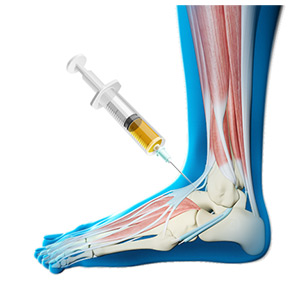
Platelet-Rich Plasma (PRP) injections in the ankle represent a regenerative, biologic therapy intended to alleviate pain, promote healing, and reduce inflammation in the ankle joint or associated soft tissues. The process involves drawing a sample of an individual’s blood, concentrating the platelets (which carry growth factors and signaling proteins), and injecting the PRP into the target area (e.g. joint space, tendons, ligaments) under imaging guidance.
What Are the Indications for PRP Injections in the Ankle?
PRP may be considered for a variety of ankle pathologies, including (but not limited to):
- Ankle osteoarthritis (mild to moderate)
- Chronic ankle instability or prior ligament injuries (e.g., anterior talofibular ligament, calcaneofibular ligament)
- Tendinopathies around the ankle (e.g. Achilles, posterior tibial, peroneal)
- Osteochondral lesions of the talus (OLT)
- Bursitis or soft tissue inflammation around the ankle
- Adjunctive therapy post-surgical repair to boost healing
What is the Procedure for PRP Injections in the Ankle?
The PRP ankle injection procedure is performed in a minimally invasive manner, typically with imaging guidance (ultrasound or fluoroscopy) to ensure precise placement. Key steps include:
- Blood draw: Usually 15–60 mL of the patient’s venous blood is collected.
- Centrifugation: The blood sample is spun in a centrifuge to separate components; platelets are concentrated into plasma, creating the PRP.
- Preparation of injection site: The ankle region is sterilized; a local anesthetic may be used to reduce discomfort.
- Injection: The prepared PRP is injected into the targeted location (intra-articular joint, tendon sheath, damaged ligament, lesion) under imaging guidance for accuracy.
- Duration: The entire process often takes about 15–30 minutes.
What Does Post-Injection Care for Ankle PRP Involve?
After receiving a PRP injection in the ankle, individuals should follow a structured recovery plan:
- Rest and protection: Minimal weight bearing for 24–48 hours.
- Medication: Avoid nonsteroidal anti-inflammatory drugs (NSAIDs) for ~1–2 weeks (or per physician’s protocol) so as not to blunt platelet activity.
- Activity restrictions: Avoid high-impact or strenuous loading for several weeks (timeline individualized).
- Monitoring and follow-up: Clinical assessments over 4–12 weeks to examine pain relief, functional improvement, and possible need for repeat injections.
?Individuals often report progressive symptom improvement within 4 to 8 weeks, though individual responses vary. Some cases may require 1–3 injections spaced several weeks apart depending on severity and clinical response.
What Are the Risks and Complications of Ankle PRP Injections?
PRP injections are generally considered safe, since they use autologous (patient’s own) blood; however, as with any invasive procedure, there are potential risks:
- Pain, swelling, or stiffness at the injection site
- Bruising or local bleeding / hematoma
- Infection (rare)
- Injury to adjacent structures (nerve, tendon, vessel)
- Flare reaction (temporary increase in symptoms)
- Variable clinical response: not all patients achieve full relief
Who Is a Good Candidate, and Who Should Avoid It?
Good candidates may include individuals with moderate degenerative changes, persistent tendon pain not responsive to conservative therapy, or ligament injuries failing standard treatment.
Relative contraindications include:
- Severe, advanced osteoarthritis with major joint destruction
- Active infection or skin lesions over the injection site
- Coagulopathy or platelet disorders
- Use of anticoagulants or bleeding risk
- Systemic conditions (e.g., malignancy, severe uncontrolled diabetes)
Why Choose Dr. Blake Ohlson for Platelet-Rich Plasma (PRP) Injections for the Ankle in Mount Pleasant, SC?
Choosing the right physician for regenerative medicine is essential because successful PRP treatment depends on accurate diagnosis, careful patient selection, and precise injection techniques. Dr. Blake Ohlson combines extensive orthopedic expertise with advanced regenerative medicine training to provide evidence-based care for patients experiencing ankle pain and injuries.
Patients throughout Mount Pleasant, Charleston, Summerville, and surrounding South Carolina communities trust Dr. Ohlson because he offers:
- Comprehensive evaluation of ankle pain and underlying conditions
- Expertise in both orthopedic and regenerative medicine treatments
- Ultrasound-guided precision for accurate PRP placement when appropriate
- Personalized treatment plans tailored to each patient's condition and activity level
- Conservative care options before considering surgery whenever possible
- Advanced care for athletes, active adults, and individuals with chronic ankle conditions
- Compassionate care focused on restoring mobility, function, and quality of life
Whether you are dealing with chronic tendon pain, ligament injuries, ankle arthritis, or sports-related ankle problems, Dr. Ohlson works closely with you to determine whether PRP therapy is the right solution for your recovery goals.
Frequently Asked Questions About PRP Injections for the Ankle
How do PRP injections work for ankle injuries?
PRP therapy uses a concentrated portion of your own blood that contains platelets and growth factors. After processing the blood sample, the platelet-rich plasma is injected into the injured area to support the body's natural healing processes and potentially improve pain and function.
What ankle conditions can be treated with PRP?
PRP may be considered for several ankle conditions, including chronic tendon injuries, ligament sprains, mild to moderate ankle arthritis, chronic ankle instability, Achilles tendinopathy, posterior tibial tendon disorders, osteochondral lesions, and certain overuse injuries. A thorough evaluation is necessary to determine if PRP is appropriate for your condition.
Are PRP injections painful?
Most patients experience only mild discomfort during the procedure. A local anesthetic may be used to improve comfort, and temporary soreness at the injection site for several days afterward is common as the healing response begins.
How long does it take to recover after ankle PRP injections?
Most patients return to light daily activities within a day or two. High-impact activities are usually restricted for several weeks, and physical therapy or rehabilitation may be recommended. Many patients begin noticing gradual improvement within four to eight weeks, although recovery timelines vary.
Is PRP therapy covered by insurance?
Many insurance providers currently consider PRP therapy investigational and may not cover the treatment. Our office will discuss costs, expected benefits, and available treatment options before scheduling your procedure.
Schedule a PRP Consultation for Ankle Pain in Mount Pleasant, SC
If chronic ankle pain is limiting your mobility or preventing you from enjoying the activities you love, Platelet-Rich Plasma (PRP) therapy may be an appropriate treatment option. Dr. Blake Ohlson provides comprehensive evaluations and personalized regenerative medicine treatment plans for patients throughout Mount Pleasant, Charleston, Summerville, and surrounding South Carolina communities.
Contact our office today to schedule a consultation and learn whether PRP injections for the ankle can help you reduce pain, support healing, and return to a more active lifestyle.