
Expert Patellofemoral Instability Treatment in Mount Pleasant, SC
If your kneecap repeatedly slips out of place, feels unstable, or causes persistent knee pain, it may be a sign of patellofemoral instability. This condition can make everyday activities such as walking, climbing stairs, exercising, or participating in sports difficult and uncomfortable. Early diagnosis and appropriate treatment can help restore knee stability, reduce pain, and prevent additional cartilage damage.
Blake Ohlson, M.D. is a board-certified orthopedic and regenerative medicine specialist providing comprehensive patellofemoral instability treatment in Mount Pleasant, SC. He evaluates each patient's knee anatomy, activity level, and goals to develop a personalized treatment plan. Depending on the severity of the condition, treatment may include physical therapy, bracing, activity modification, regenerative medicine options when appropriate, or advanced minimally invasive surgical procedures to restore proper kneecap alignment and knee function.
Whether your instability developed after a sports injury, a traumatic kneecap dislocation, or recurrent episodes of the kneecap giving way, Dr. Ohlson is committed to helping you return to an active lifestyle with expert, patient-centered orthopedic care.
What is Patellofemoral Instability?
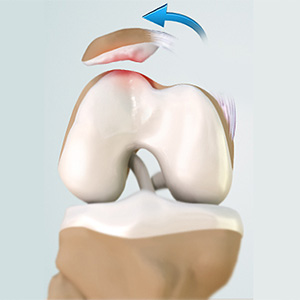
Patellofemoral instability means that the patella (kneecap) moves out of its normal pattern of alignment. This malalignment can damage the underlying soft structures such as muscles and ligaments that hold the knee in place.
What are the Causes of Patellofemoral Instability?
Patellofemoral instability can be caused because of variations in the shape of the patella or its trochlear groove as the knee bends and straightens. Normally, the patella moves up and down within the trochlear groove when the knee is bent or straightened. Patellofemoral instability occurs when the patella moves either partially (subluxation) or completely (dislocation) out of the trochlear groove.
A combination of factors can cause this abnormal tracking and include the following:
- Anatomical defect: Flat feet or fallen arches and congenital abnormalities in the shape of the patella bone can cause misalignment of the knee joint.
- Abnormal Q angle: The high Q angle (angle between the hips and knees) often results in maltracking of the patella such as in knock knees.
- Patellofemoral arthritis: Patellofemoral arthritis occurs when there is a loss of the articular cartilage on the back of the kneecap. This can eventually lead to abnormal tracking of the patella.
- Improper muscle balance: Weak quadriceps (anterior thigh muscles) can lead to abnormal tracking of the patella, causing it to subluxate or dislocate.
Young, active individuals involved in sports activities are more prone to patellofemoral instability.
What are the Symptoms of Patellofemoral Instability?
Patellofemoral instability causes pain when standing up from a sitting position and a feeling that the knee may buckle or give way. When the kneecap slips partially or completely you may have severe pain, swelling, bruising, visible deformity and loss of function of the knee. You may also have changes in sensation such as numbness or even partial paralysis below the dislocation because of pressure on the nerves and blood vessels.
How is Patellofemoral Instability Diagnosed?
Your doctor evaluates the source of patellofemoral instability based on your medical history and a physical examination. Other diagnostic tests such as X-rays, MRI, and CT scan may be ordered to determine the cause of your knee pain and to rule out other conditions.
What is the Treatment for Patellofemoral Instability?
Conservative Treatment
If your kneecap is only partially dislocated (subluxation), your physician may recommend non-surgical treatments, such as pain medications, rest, ice, physical therapy, knee-bracing, and orthotics. If the kneecap has been completely dislocated, the kneecap may need to be repositioned back in its proper place in the groove. This process is called closed reduction.
Surgical Treatment
Surgery is sometimes necessary to help return the patella to a normal tracking path when other non-surgical treatments have failed. The aim of the surgery is to realign the kneecap in the groove and decrease the Q angle.
Patellar realignment surgery is broadly classified into:
- Proximal re-alignment procedures: During this procedure, structures that limit the movements on the outside of the patella are lengthened or ligaments on the inside of the patella are shortened.
- Distal re-alignment procedures: During this procedure, the Q angle is decreased by moving the tibial tubercle towards the inner side of the knee.
The surgery is performed under sterile conditions in the operating room under spinal or general anesthesia. Your surgeon will make two or three small cuts around your knee. An arthroscope, a narrow tube with a tiny camera on the end is inserted through one of the incisions to view the knee joint. Specialized instruments are inserted into the joint through other small incisions. The camera attached to the arthroscope displays the image of the joint on the monitor. A sterile solution will be pumped into your knee to stretch the knee and provide a clear view and room for your surgeon to work. With the images from the arthroscope as a guide, your surgeon can determine any pathology or anomaly and repair it through the other incisions with various instruments.
After the evaluation is completed, a larger incision is made over the front of the knee. Depending on your condition, a lateral retinacular release may be performed. In this procedure, the tight ligaments on the outer side of the knee are released, allowing the patella to sit properly in the femoral groove.
Your surgeon may also tighten the tendons on the inside, or medial side of the knee to realign the quadriceps.
In cases where the malalignment is severe, a procedure called a tibial tubercle transfer (TTT) will be performed. In this procedure, a section of bone where the patellar tendon attaches to the tibia is removed. This bony section is then shifted and properly realigned with the patella and reattached to the tibia using screws. Once the malalignment is repaired and confirmed with arthroscopic evaluation, the incisions are closed with sutures.
What Does Postoperative Care for Patellofemoral Instability Surgery Involve?
Following the surgery, your doctor will recommend pain medications to relieve pain. To help reduce the swelling, you will be instructed to elevate the leg and apply ice packs over the knee. Crutches are necessary for the first few weeks to prevent weight-bearing on the knee. A knee immobilizer may be used to stabilize the knee. You will be instructed on the activities to be avoided and exercises to be performed for a faster recovery. A rehabilitation program may be advised for a speedy recovery.
What are the Risks and Complications of Patellofemoral Instability Surgery?
The possible risks and complications associated with the surgery include:
- Loss of ability to extend the knee
- Recurrent dislocations or subluxations
- Arthrofibrosis (thick fibrous material around the joint)
- Persistent pain
Why Choose Dr. Blake Ohlson for Patellofemoral Instability in Mount Pleasant, SC?
Choosing the right orthopedic specialist is an important step toward restoring knee stability and preventing recurrent kneecap dislocations. Dr. Blake Ohlson provides individualized care for patients experiencing patellofemoral instability, combining thorough evaluation with evidence-based treatment recommendations tailored to each patient's needs.
Patients throughout Mount Pleasant, SC, trust Dr. Ohlson because he offers:
- Comprehensive evaluation of kneecap instability and underlying causes
- Expertise in both non-surgical and surgical treatment options
- Advanced arthroscopic and minimally invasive surgical techniques when indicated
- Personalized rehabilitation plans focused on restoring strength and stability
- Care for athletes, active adults, and individuals with chronic or recurrent instability
- Patient-focused treatment designed to relieve pain and improve long-term knee function
Dr. Ohlson's goal is to identify the underlying cause of patellofemoral instability and recommend the most appropriate treatment to help patients safely return to work, sports, and daily activities.
Patellofemoral Instability FAQs
What is patellofemoral instability?
Patellofemoral instability occurs when the kneecap (patella) moves partially or completely out of its normal groove in the femur. It can cause pain, instability, recurrent dislocations, and difficulty with daily activities.
What causes patellofemoral instability?
Common causes include traumatic kneecap dislocations, abnormal knee anatomy, weak thigh muscles, ligament injuries, flat feet, abnormal Q angle, and congenital differences in the shape of the kneecap or femoral groove.
What are the symptoms?
Symptoms may include:
- Knee pain
- Feeling that the knee gives way
- Recurrent kneecap dislocations
- Swelling
- Clicking or popping sensations
- Difficulty walking, running, or climbing stairs
How is patellofemoral instability diagnosed?
Diagnosis typically includes a detailed medical history, physical examination, and imaging studies such as X-rays, MRI, or CT scans to evaluate the kneecap, ligaments, cartilage, and alignment of the knee.
Can patellofemoral instability be treated without surgery?
Yes. Many patients improve with conservative treatment, including physical therapy, activity modification, knee bracing, pain management, and strengthening exercises designed to improve kneecap tracking and stability.
When is surgery recommended?
Surgery may be recommended for patients with recurrent kneecap dislocations, significant ligament damage, abnormal knee anatomy, or persistent instability that does not improve with non-surgical treatment.
What surgeries are performed for patellofemoral instability?
Depending on the underlying cause, surgery may include arthroscopy, lateral retinacular release, medial soft tissue reconstruction, tibial tubercle transfer (TTT), or other patellar realignment procedures.
How long is recovery after surgery?
Recovery varies depending on the procedure performed, but many patients participate in a structured rehabilitation program over several months to restore strength, mobility, and knee stability before returning to full activities.
Schedule a Patellofemoral Instability Evaluation in Mount Pleasant, SC
If you're experiencing repeated kneecap dislocations, knee instability, or persistent anterior knee pain, don't wait for the condition to worsen. Early evaluation can help prevent additional joint damage and improve long-term outcomes.
Dr. Blake Ohlson provides comprehensive patellofemoral instability treatment in Mount Pleasant, SC, offering personalized care ranging from conservative management to advanced surgical solutions when needed.
Schedule your appointment today to schedule an appointment and learn more about your treatment options for restoring knee stability and returning to the activities you enjoy.