
Hip Labral Tear Treatment in Mount Pleasant, SC
A hip labral tear can cause persistent hip or groin pain, clicking sensations, stiffness, and limited mobility that interfere with work, sports, and everyday activities. Whether your injury resulted from athletics, repetitive motion, or age-related wear and tear, an accurate diagnosis is essential for effective treatment. Blake Ohlson, M.D. provides expert evaluation and treatment for hip labral tears in Mount Pleasant, SC, helping patients relieve pain, restore hip function, and return to active lifestyles.
The labrum is a ring of cartilage that stabilizes the hip joint and allows smooth, pain-free movement. When it becomes torn, patients may experience mechanical symptoms such as catching, locking, or reduced range of motion. Dr. Ohlson offers comprehensive care using advanced diagnostic imaging and individualized treatment plans that may include physical therapy, regenerative medicine, injections, or minimally invasive hip arthroscopy when appropriate. Patients throughout Mount Pleasant, Charleston, and Summerville trust Dr. Ohlson for advanced orthopedic care focused on preserving hip function and improving long-term outcomes.
What is Anatomy of the Hip Joint?
The hip joint is a ball and socket joint in which the head of the femur is the ball and the acetabulum forms the socket. The labrum helps to deepen the socket and provide stability to the joint. It also acts as a cushion and enables smooth movement of the joint.
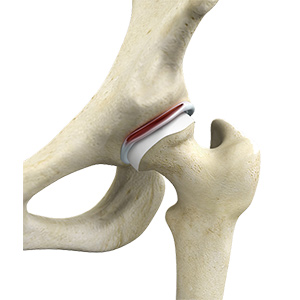
What is a Hip Labral Tear?
A hip labral tear is an injury to the labrum, the cartilage that surrounds the outside rim of your hip joint socket.
What are the Causes of Hip Labral Tears?
A tear in the labrum of the hip can result from:
- Traumatic injury, such as a motor vehicle accident
- Participating in sports such as football, soccer, basketball and snow skiing
- Repetitive movements
- Weight-bearing activities over time, which can lead to joint wear and tear
- Degenerative changes to the hip joint in the elderly
What are the Symptoms of Hip Labral Tears?
You may not have symptoms. However, sometimes, you may experience:
- Pain in the hip or groin area
- Catching or locking sensation in the hip joint
- Significant restriction in hip movement
How is a Hip Labral Tear Diagnosed?
Your doctor will order certain tests to determine the cause of your hip pain.
X-rays of the hip allow your physician to rule out other possible conditions such as fractures or structural abnormalities.
Magnetic resonance imaging (MRI) may also be ordered to evaluate the labrum. An injection of contrast material into the hip joint space at the time of the MRI can help detect the labral tears much more clearly.
The injection of a local anesthetic into the joint space is sometimes performed to confirm the location of the pain. If the injection completely relieves your pain, it is likely that the cause of the problem is located inside the hip joint.
What are the Treatment Options for a Hip Labral Tear?
The treatment for a hip labral tear will depend on the severity of the condition. If you have a minor labral tear, you will recover within a few weeks with the help of non-surgical treatments, which include:
- Medications: Anti-inflammatory medications can be helpful in relieving pain and reducing inflammation associated with labral tears. Your doctor may also recommend cortisone injections to alleviate the pain associated with a hip labral tear.
- Physical therapy: Physical therapy that helps to improve hip range of motion, strength, and stability are also recommended.
However, severe cases may require arthroscopic surgery to remove or repair the torn portion of the labrum.
Surgery for Hip Labral Tears
Hip arthroscopy, also referred to as keyhole surgery or minimally invasive surgery, is a surgical procedure in which an arthroscope, a narrow tube with a tiny camera on the end, is used to assess and repair damage to the hip.
The surgery is performed under general, spinal or local anesthesia.
Your surgeon will make 2 or 3 small incisions around the hip joint area. The arthroscope is inserted into the hip joint through one of the incisions to view the labral tear. The camera attached to the arthroscope displays the image of the joint on the monitor. A sterile solution will be pumped into the joint to provide a clear view and room to work. Through the other incisions, specially designed instruments are inserted. Your surgeon repairs the torn tissue by sewing it back together or removes the torn piece altogether, depending upon the cause and extent of the tear. After the completion of the procedure, the arthroscope and instruments are removed and the incisions are closed.
What Does Postoperative Care Following Surgery for Hip Labral Tears Involve?
Following the surgery, you will be given instructions on caring for your incisions, activities to avoid and exercises to perform for a fast recovery and a successful outcome. Physical therapy will be recommended by your doctor to restore your strength and mobility. Your doctor will also prescribe pain medications to keep you comfortable.
What are the Risks and Complications of Surgery for Hip Labral Tears?
The possible risks and complications specific to arthroscopic hip surgery include:
- Infection
- Deep vein thrombosis (DVT)
- Blood vessel or nerve damage
- Hemarthrosis (bleeding inside the joint)
- Failure to relieve pain
Why Choose Dr. Blake Ohlson for Hip Labral Tear Treatment in Mount Pleasant, SC?
Choosing an experienced orthopedic specialist is important when treating hip labral injuries, as early diagnosis and appropriate treatment can help prevent further joint damage. Dr. Blake Ohlson combines advanced orthopedic expertise with personalized care to develop treatment plans tailored to each patient's symptoms, activity level, and goals.
Patients in Mount Pleasant, SC choose Dr. Ohlson because he offers:
- Fellowship-trained expertise in orthopedic surgery and sports medicine
- Extensive experience diagnosing and treating hip labral tears
- Advanced diagnostic imaging for accurate evaluation of hip injuries
- Personalized treatment plans based on the severity of the injury and individual lifestyle
- Comprehensive non-surgical treatment options, including physical therapy and regenerative medicine when appropriate
- Expertise in minimally invasive hip arthroscopy for labral repair and reconstruction
- Structured rehabilitation programs designed to restore strength, stability, and mobility
- Convenient care for patients throughout Mount Pleasant, Charleston, and Summerville
Dr. Ohlson is committed to relieving pain, preserving the natural hip joint whenever possible, and helping patients safely return to their daily activities and favorite sports.
Hip Labral Tear FAQs
What is a hip labral tear?
A hip labral tear is a tear in the ring of cartilage (labrum) that surrounds the hip socket. The labrum helps stabilize the hip joint, cushions movement, and creates a secure fit between the ball and socket.
What causes a hip labral tear?
Hip labral tears may result from sports injuries, repetitive hip movements, motor vehicle accidents, structural abnormalities such as hip impingement, or age-related degeneration of the joint.
What are the symptoms of a hip labral tear?
Common symptoms include hip or groin pain, clicking or catching sensations, locking of the joint, stiffness, reduced range of motion, and discomfort during prolonged sitting, walking, or athletic activity.
How is a hip labral tear diagnosed?
Diagnosis typically includes a physical examination and imaging studies such as X-rays and MRI. In many cases, an MRI arthrogram, which uses contrast dye, provides a more detailed view of the labrum. Diagnostic injections may also help confirm the source of pain.
Can a hip labral tear heal without surgery?
Small or less severe tears often improve with conservative treatments such as activity modification, physical therapy, anti-inflammatory medications, and injections. Larger or persistent tears may require arthroscopic surgery.
What is hip arthroscopy?
Hip arthroscopy is a minimally invasive procedure that uses a small camera and specialized instruments inserted through tiny incisions to repair or remove damaged portions of the labrum while preserving healthy tissue whenever possible.
How long does recovery take after hip labral tear surgery?
Recovery varies depending on the extent of the repair and the patient's activity level. Most patients participate in physical therapy for several weeks to months to restore strength, flexibility, and normal hip function.
What happens if a hip labral tear is left untreated?
Untreated labral tears may lead to persistent pain, worsening mechanical symptoms, decreased mobility, and, in some cases, progressive cartilage damage that increases the risk of developing hip arthritis.
Schedule a Hip Labral Tear Evaluation in Mount Pleasant, SC
Persistent hip or groin pain, clicking, or limited mobility may be signs of a hip labral tear. Early diagnosis and personalized treatment can help relieve symptoms, protect your hip joint, and restore your active lifestyle.
Schedule your appointment with Dr. Ohlson for expert evaluation and treatment of hip labral tears in Mount Pleasant, SC. Proudly serving patients throughout Mount Pleasant, Charleston, Summerville, and surrounding South Carolina communities, Dr. Ohlson provides comprehensive orthopedic care using the latest non-surgical and minimally invasive treatment options to help you move with confidence again.