
Hip Instability Treatment in Mount Pleasant, SC
If your hip feels like it gives way, clicks, catches, or becomes painful during everyday activities or sports, you may be experiencing hip instability. Left untreated, hip instability can lead to ongoing pain, reduced mobility, recurrent injuries, and damage to the cartilage and labrum. Blake Ohlson, M.D. provides comprehensive diagnosis and treatment for hip instability in Mount Pleasant, SC, helping patients restore stability, reduce pain, and return to active lifestyles.
Hip instability can result from traumatic injuries, repetitive overuse, structural abnormalities, or damage to the ligaments and labrum that support the hip joint. Dr. Ohlson uses advanced diagnostic imaging and a thorough orthopedic evaluation to determine the underlying cause and create a personalized treatment plan. Depending on your condition, treatment may include physical therapy, regenerative medicine, minimally invasive hip arthroscopy, or surgical stabilization. Patients throughout Mount Pleasant, Charleston, and Summerville trust Dr. Ohlson for expert orthopedic care focused on preserving hip function and long-term joint health.
What is Anatomy of the Hip?
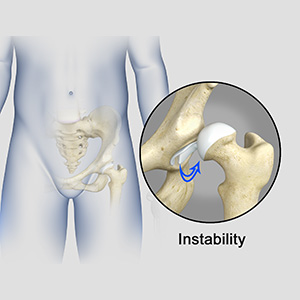
The hip plays an important role in supporting your upper body weight while standing, walking and running, and hip stability is crucial for these functions. The femur (thighbone) and acetabulum (socket-shaped region of the pelvis) join to form the hip joint, while the labrum (rim of tissue that seals the hip joint) and the ligaments lining the hip capsule maintain the stability of the hip.
What is Hip Instability?
Injury or damage to these structures can lead to a condition called hip instability when the joint becomes unstable.
What are the Symptoms of Hip Instability?
The most common symptoms of hip instability include:
- Pain
- Laxity
- Giving way of the hip
- Producing a clicking sound
- Dislocation
What are the Causes of Hip Instability?
Hip instability can be traumatic or atraumatic. Traumatic instability can be caused by injuries from sports or motor vehicle accidents. These injuries can damage the bony structures, labrum, and cartilage of the hip joint and form loose bodies. It can range from severe dislocation to a simple subluxation (partial displacement) of the hip joint. Atraumatic instability can be caused by overuse or developmental/congenital abnormalities of the hip joint.
Conditions that can cause hip instability include:
- Labral and ligament tears
- Hip dysplasia (misaligned hip bones)
- Femoroacetabular impingement (abnormally-shaped hip bones)
- Tears to the ligamentum teres
How is Hip Instability Diagnosed?
Your doctor will diagnosis hip instability based on your medical history and a physical examination. Imaging studies such as plain X-rays, MRI and MRI arthrography (use of a contrast agent) may also be ordered to confirm instability. Your doctor may also perform hip instability tests such as posterior impingement or dial test; both of which involve simple range of motion exercises.
What is the Treatment for Hip Instability?
Your doctor may start you off on a conservative/non-operative treatment approach such as protected weight-bearing (crutch, cane or wheelchair) and referral to a physical therapist for exercises. A physical therapist will instruct you on special exercises that are focused on improving your strength, balance, and flexibility.
When conservative options fail to resolve your symptoms or if you have large fractures, you may be recommended to undergo surgical management. Surgery can be arthroscopic (minimally invasive) or open depending on your condition. Most of the common causes for hip instability, such as damage to the hip capsule and ligaments surrounding the joint and labral tears, can be rectified arthroscopically. Your doctor will be the best person to address your concerns and help you treat your instability.
Why Choose Dr. Blake Ohlson for Hip Instability Treatment in Mount Pleasant, SC?
Hip instability requires careful evaluation because multiple structures within the hip joint can contribute to symptoms. Dr. Blake Ohlson combines advanced orthopedic expertise with an individualized approach to identify the source of instability and recommend the most effective treatment for each patient.
Patients in Mount Pleasant, SC choose Dr. Ohlson because he offers:
- Fellowship-trained expertise in orthopedic surgery and sports medicine
- Comprehensive evaluation of traumatic and non-traumatic hip instability
- Advanced imaging to accurately diagnose labral tears, ligament injuries, and structural hip conditions
- Personalized treatment plans based on your symptoms, activity level, and goals
- Non-surgical treatment options, including physical therapy and regenerative medicine when appropriate
- Expertise in minimally invasive hip arthroscopy for labral repair and hip stabilization
- Comprehensive rehabilitation programs focused on restoring strength, balance, and joint stability
- Convenient care for patients throughout Mount Pleasant, Charleston, and Summerville
Dr. Ohlson's goal is to relieve pain, restore hip stability, and help patients safely return to work, sports, and everyday activities with confidence.
Hip Instability FAQs
What is hip instability?
Hip instability occurs when the structures that normally stabilize the hip joint, including the labrum, ligaments, and joint capsule, are damaged or weakened, allowing the hip to move abnormally or feel unstable.
What causes hip instability?
Hip instability may result from sports injuries, falls, motor vehicle accidents, repetitive overuse, hip dysplasia, femoroacetabular impingement (FAI), labral tears, ligament injuries, or congenital structural abnormalities.
What are the symptoms of hip instability?
Common symptoms include hip pain, a feeling that the hip is giving way, clicking or popping sensations, reduced stability during movement, recurrent subluxations or dislocations, and limited function during physical activity.
How is hip instability diagnosed?
Dr. Ohlson diagnoses hip instability through a detailed medical history, physical examination, specialized hip stability tests, and imaging studies such as X-rays, MRI, or MRI arthrograms to evaluate the bones, cartilage, labrum, and supporting ligaments.
Can hip instability be treated without surgery?
Yes. Many patients improve with conservative treatment, including activity modification, protected weight-bearing, physical therapy, and strengthening exercises designed to improve hip stability. Regenerative medicine may also be considered for selected patients.
When is surgery recommended for hip instability?
Surgery may be recommended when conservative treatment fails to relieve symptoms or when significant labral tears, ligament injuries, fractures, or structural abnormalities are causing persistent instability. Many conditions can be treated using minimally invasive hip arthroscopy.
What is hip arthroscopy?
Hip arthroscopy is a minimally invasive procedure that uses a small camera and specialized instruments inserted through tiny incisions to repair damaged tissues, stabilize the joint, and treat conditions contributing to hip instability.
Can untreated hip instability lead to long-term damage?
Yes. Persistent instability can increase stress on the cartilage and labrum, potentially leading to recurrent injuries, progressive joint damage, and an increased risk of developing hip arthritis over time.
Schedule a Hip Instability Evaluation in Mount Pleasant, SC
If your hip feels unstable, painful, or repeatedly gives way, early evaluation can help prevent additional joint damage and improve your long-term outcome. Whether your symptoms developed after an injury or gradually over time, Dr. Blake Ohlson offers personalized treatment designed to restore stability and help you return to an active lifestyle.
Schedule your appointment with Dr. Ohlson for expert evaluation and treatment of hip instability in Mount Pleasant, SC. Proudly serving patients throughout Mount Pleasant, Charleston, Summerville, and surrounding South Carolina communities, Dr. Ohlson provides advanced orthopedic care using both conservative and minimally invasive treatment options to help you move with greater confidence and comfort.