
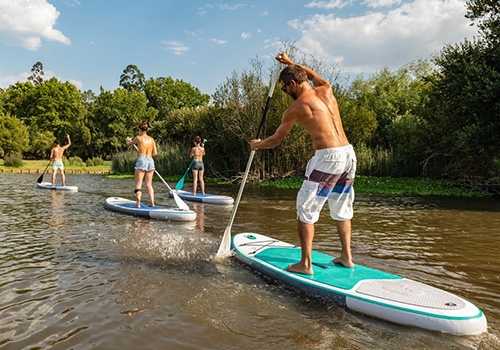
From paddleboarding on Shem Creek to lifting kids, groceries, or tools, your shoulders do a lot of work in Charleston life. When the rotator cuff becomes irritated, strained, or injured, simple movements can start to hurt. Platelet rich plasma is one nonsurgical option you may hear about. This article covers the range of rotator cuff injuries, how ultrasound guided PRP fits alongside therapy, and what recovery can look like.
The Range of Rotator Cuff Injuries Seen Around Charleston
Rotator cuff problems are not all the same. They tend to fall along a spectrum, from irritated tendons to torn ones, and the right plan depends on where you are on it.
Tendinopathy and Tendinitis
Rotator cuff tendinopathy describes painful, irritated tendons, often from repeated overhead use. It is a common condition that can affect your daily function and quality of life.1 Many people notice shoulder pain when reaching, lifting, or sleeping on the affected side.
Strains and Overuse Injuries
Shoulder sprains and strains can follow a sudden lift, a fall, or a long weekend of yard work. These injuries stress the muscles and tendons that keep the shoulder stable and moving smoothly.
Tears
When tendon damage progresses, a rotator cuff tear can develop, either partway through the tendon or completely. Larger tears may need a different approach, which can include surgery.
How PRP Fits Into Rotator Cuff Care
PRP therapy concentrates platelets and growth factors from a small sample of your blood, which are then injected into the injured area to support your natural healing response. For the shoulder, it may be considered for rotator cuff tendinitis or tears, impingement, bursitis, and other conditions.
One meta analysis of eight randomized trials found PRP to be a safe and effective option for long term pain control and shoulder function in rotator cuff disorders.1 Another found that PRP and comparison treatments performed similarly in the short and medium term, with PRP showing a pain advantage only after 24 weeks.2
Why Ultrasound Guidance Matters at Our Mount Pleasant Office
Musculoskeletal ultrasound lets us watch your tendons move in real time, compare both shoulders, and pinpoint the source of pain, often during the same visit. During an ultrasound guided injection, the needle is visible as the PRP is delivered, which confirms placement rather than relying on surface landmarks alone.
It is fair to note that studies comparing ultrasound guided and landmark guided cortisone injections for rotator cuff pain have not shown clearly better outcomes with ultrasound.4 Its main value is accuracy and the chance to assess the tendon while you are in the room.
Pairing PRP With Physical Therapy
PRP is best viewed as one part of a broader plan. Physical therapy uses stretching, strengthening, and guided exercise to restore movement, and it remains a foundation of rotator cuff care. A PRP injection may be combined with a rehab program so the tendon is loaded gradually as it recovers.
Recovery After Shoulder PRP for Charleston and Summerville Patients
Recovery is usually gradual. Temporary soreness at the injection site is common, and ice can help. You will likely avoid heavy lifting and strenuous activity for a few weeks, then return to therapy and your usual activities step by step. Improvement, if it comes, tends to build over weeks to months, and some people need more than one injection.
Frequently Asked Questions
Can PRP help rotator cuff tendinitis?
PRP may reduce pain for some people with rotator cuff tendinopathy, particularly over the longer term, but study results are mixed.1,2 An exam helps determine whether it suits your shoulder.
Do you still need physical therapy after a PRP injection?
Usually, yes. Therapy helps restore strength and motion, and PRP may be paired with a structured exercise plan as your shoulder recovers.
Is an ultrasound guided PRP injection painful?
You may feel brief discomfort and some temporary soreness afterward, and a local anesthetic is used. Injection site pain is reported more often with PRP than with some other injections.3
Where can you get ultrasound guided PRP for a rotator cuff injury in Charleston, SC?
Our Mount Pleasant office provides ultrasound guided PRP for patients from Charleston, Summerville, and nearby communities. The evaluation and guided procedure can often be completed during the same appointment.
How soon can you get back to activity after shoulder PRP?
You can usually leave the same day, but heavy lifting and strenuous exercise are typically limited for a few weeks. Your return to full activity is guided by how your shoulder responds.
Moving Your Shoulder Forward in Charleston
Rotator cuff injuries are common, and you have more than one path forward. If shoulder pain is limiting your work, workouts, or sleep, you can book a visit at our Mount Pleasant office, close to Charleston and Summerville, and get a plan that combines precise diagnosis with the right mix of treatment.
References
- A Hamid MS, Sazlina SG. Platelet-rich plasma for rotator cuff tendinopathy: A systematic review and meta-analysis. PLoS One. 2021;16(5):e0251111. https://pubmed.ncbi.nlm.nih.gov/33970936/
- Lin MT, Wei KC, Wu CH. Effectiveness of Platelet-Rich Plasma Injection in Rotator Cuff Tendinopathy: A Systematic Review and Meta-Analysis of Randomized Controlled Trials. Diagnostics (Basel). 2020;10(4):189. https://pubmed.ncbi.nlm.nih.gov/32231127/
- Masiello F, Pati I, Veropalumbo E, et al. Ultrasound-guided injection of platelet-rich plasma for tendinopathies: a systematic review and meta-analysis. Blood Transfusion. 2023;21(2):119 to 136. https://pubmed.ncbi.nlm.nih.gov/36346880/
- Adamson NJ, Tsuro M, Adams N. Ultrasound-guided versus landmark-guided subacromial corticosteroid injections for rotator cuff related shoulder pain: A systematic review of randomised controlled trials. Musculoskeletal Care. 2022;20(4):784 to 795. https://pubmed.ncbi.nlm.nih.gov/35510534/