
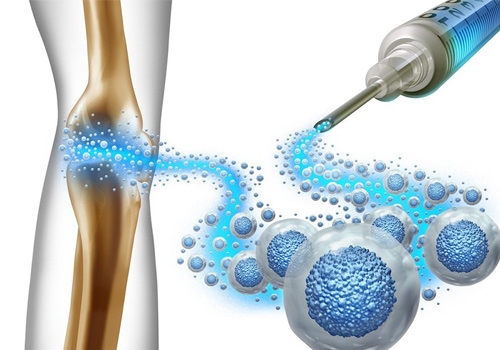
When joint pain, tendon injuries, or cartilage problems begin limiting the activities you enjoy, regenerative medicine may offer a treatment option to discuss with an orthopedic specialist. Cellular therapies use biological material collected from your body, including bone marrow or fat tissue, to create treatments tailored to orthopedic conditions. But what do these therapies involve, and who may benefit? This guide explains bone marrow and fat-based cellular therapy in Charleston.
What Is Cellular Therapy in Orthopedic Care?
Cellular therapy refers to treatments that use biological material from a patient's own body as part of an orthopedic treatment strategy. Bone marrow and adipose, or fat, tissue contain cells and biological components that may have applications in tissue repair and inflammation management.
These treatments are different from traditional medications because the material comes from the patient's own body. However, cellular therapy is not appropriate for every injury or condition, and outcomes can vary. A careful evaluation is important before considering treatment.
What Is Bone Marrow Concentrate?
Bone marrow concentrate is obtained from the patient's bone marrow, commonly from the pelvic bone. The collected marrow is processed to concentrate its cellular and biological components before being used for an orthopedic procedure.
Bone marrow concentrate, sometimes called BMC or BMAC, may be considered for certain musculoskeletal conditions involving joints, tendons, ligaments, or cartilage. The goal is generally to provide biological components that may support the body's natural healing environment.
It is important to understand that bone marrow concentrate is not a guaranteed method of regenerating damaged tissue. Its potential benefits depend on the diagnosis, severity of the condition, overall health, and other factors.
How Does Fat-Based Cellular Therapy Work?
Fat tissue is another potential source of biological material used in regenerative medicine. Lipoaspirate-based treatments involve collecting a small amount of adipose tissue and processing it for use in an orthopedic procedure.
We offer lipoaspirate therapies, including Lipogems, as one of our regenerative medicine options. Our practice is also listed as a Principal Investigator for Lipogems.
The approach may be considered for selected orthopedic problems, but candidacy should be determined individually rather than assuming that cellular therapy is appropriate for every painful joint or injury.
Bone Marrow vs. Fat: What Is the Difference?
Bone marrow and fat are different biological sources, and the procedures used to obtain and process them also differ.
Bone marrow concentrate:
- Obtained from bone marrow, commonly from the pelvis
- Contains a mixture of cellular and biological components
- May be considered for selected orthopedic conditions
Fat-based therapy:
- Obtained from adipose tissue
- Uses processed lipoaspirate
- May be considered as another regenerative treatment option
Neither approach should automatically be considered superior. The appropriate choice depends on the patient's diagnosis, anatomy, goals, and available evidence for the specific condition.
Who May Be a Candidate for Cellular Therapy in Charleston?
A consultation can help determine whether regenerative treatment is reasonable. Evaluation may include medical history, physical examination, imaging, and ultrasound assessment.
Depending on the problem, regenerative treatment may be discussed for conditions involving the knee, hip, shoulder, foot, ankle, tendons, or other musculoskeletal structures. Sports-related injuries and degenerative joint problems may also require individualized consideration.
Other treatments, including physical rehabilitation, activity modification, medications, conventional injections, or surgery, may be more appropriate in some cases.
What Role Does Ultrasound Play?
Ultrasound can provide real-time visualization of soft tissues and anatomical structures during an orthopedic procedure. Our practice uses ultrasound guidance for injections, which can help the physician accurately target the intended treatment area.
For patients considering regenerative medicine, image-guided treatment can be part of a broader approach focused on accurate diagnosis and appropriate treatment selection.
What Should You Expect During a Consultation?
A regenerative medicine consultation should begin with understanding the underlying problem rather than choosing a treatment first. The physician may review symptoms, previous treatments, imaging, activity limitations, and personal goals.
This process helps determine whether cellular therapy is appropriate and whether another nonsurgical or surgical approach may provide a better option. The decision should be based on the individual condition rather than the availability of a particular procedure.
Frequently Asked Questions
What is cellular therapy for orthopedic conditions?
Cellular therapy uses biological material obtained from a patient's body, such as bone marrow or fat tissue, as part of treatment for selected musculoskeletal conditions.
Is bone marrow concentrate the same as stem cell therapy?
No. Bone marrow concentrate contains a mixture of cells and biological components from bone marrow. It should not automatically be described as a pure stem cell treatment or as a guaranteed tissue-regeneration therapy.
What is fat-based regenerative therapy?
Fat-based regenerative therapy uses processed adipose tissue, or lipoaspirate, obtained from the patient's body. It may be considered for selected orthopedic conditions as part of regenerative medicine.
Which is better, bone marrow or fat-based cellular therapy?
There is no universally better option. The appropriate treatment depends on the patient's diagnosis, anatomy, severity of injury, goals, and clinical circumstances.
Is cellular therapy appropriate for arthritis or sports injuries?
It may be considered for certain patients with orthopedic or sports-related conditions, but candidacy varies. An orthopedic evaluation is necessary to determine whether cellular therapy or another treatment is appropriate.
If persistent joint or sports-related pain is affecting your mobility or activities, consider discussing the underlying cause and available treatment options with an orthopedic specialist in Charleston. A thorough evaluation can help you understand whether cellular therapy is appropriate for your particular condition.
Blake Ohlson, M.D. is a board-certified, fellowship-trained orthopedic surgeon with nearly two decades of experience diagnosing and treating a wide range of musculoskeletal conditions. Based in Mount Pleasant, South Carolina, he specializes in orthopedic surgery, sports medicine, and regenerative medicine, offering personalized treatment plans for hip, knee, shoulder, foot, and ankle conditions. By combining advanced non-surgical therapies, including PRP, Bone Marrow Aspirate Concentrate (BMAC), and focused shockwave therapy, with expert surgical care when needed, Dr. Ohlson helps patients achieve lasting pain relief, restore mobility, and return to the activities they enjoy.